Before you choose a call menu or decide which phones should ring, write down who owns each kind of call. Start with the caller's request, name the person responsible for the next step, and decide what you can honestly promise when that person is unavailable.
That gives you something useful to bring to a phone-system conversation: a plan your team has agreed to. You don't need to know which settings implement it yet.
This guide walks through that planning work, with a hypothetical service-business example and a worksheet you can adapt. It focuses on decisions your team controls. Specific routing behavior still needs to be confirmed for your setup.
What should a business call-routing plan include?
A useful plan connects each common caller request to an owner, an availability window, and a clear next step when that owner cannot respond.
Begin with why people call, using words a customer would recognize. "Book a visit," "change an appointment," and "ask about an invoice" are more useful starting points than your internal department names. Put less common requests in a separate list so they don't crowd out the everyday ones.
For each request, write down who can actually resolve it. The person who first answers and the person responsible for resolving the question may be different. Make that distinction explicit. "The office handles it" leaves too much room for two people to assume the other one is following up.
You can use our call-routing overview to prepare questions about the available options. Treat your written plan as the requirement, then ask the team configuring your system to explain which behavior is supported and how it would work for you.
How do you decide who should own each kind of call?
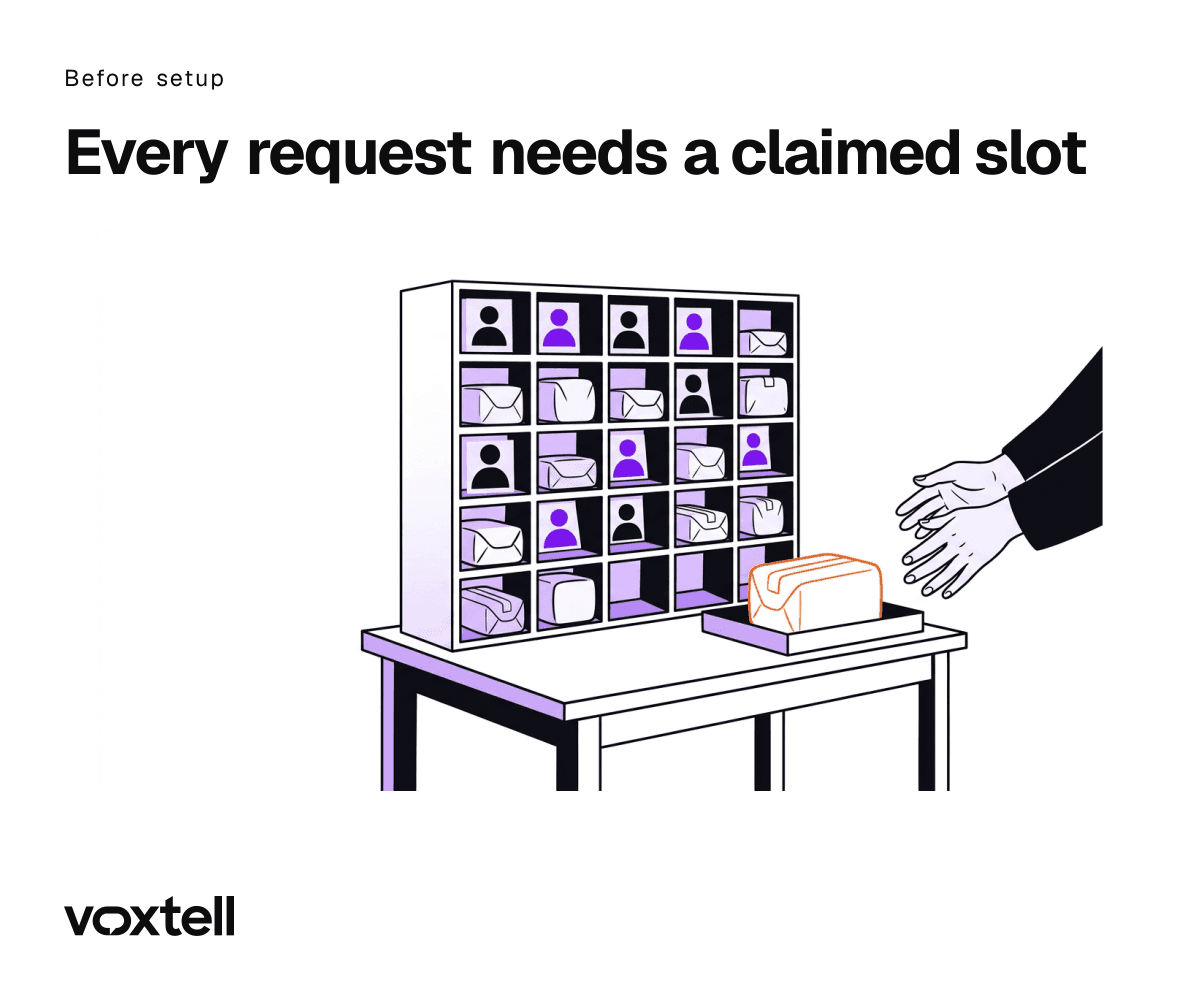
Choose an owner by the job the caller needs done, then check that person's real availability with them.
Imagine a small home-service business with an office coordinator, an owner, and technicians working at customer sites. This is a hypothetical example, not a customer result. The coordinator handles appointment questions, while the owner reviews invoice disputes. A technician's name on a staff list doesn't mean they're available to answer calls throughout the day.
In that example, sending an invoice question to the coordinator might be a reasonable first contact. But the plan should still name the owner as responsible for resolving the dispute. If a callback is appropriate, decide who records the request, who makes the callback, and what response window the business can keep.
Separate the preferred contact from the fallback. A fallback could be another agreed contact or a request for a later response, depending on the setup you confirm. It should never be "someone will probably notice." If nobody has agreed to take responsibility, you've found a staffing decision to make before configuration.
Here is a sample planning worksheet for that hypothetical business. These are proposed internal responsibilities, not claims about phone-system automation.
| Caller request | Agreed owner | Availability to confirm | Decision if unavailable |
|---|---|---|---|
| Book or change a visit | Office coordinator | When the coordinator can respond | What can be handled now, and who follows up on an unresolved request? |
| Question an invoice | Business owner | When invoice questions are reviewed | What details are needed for a useful callback? |
| Ask about an existing job | Assigned office contact | Who has the information to answer | Who takes responsibility if the answer requires checking with a technician? |
| Raise a time-sensitive concern | Designated responsible person | Whether anyone is assigned to respond at that time | What can the business truthfully tell the caller when immediate help is unavailable? |
Read each row with the person named in it. Their answer may change the plan. That's useful information before you commit to a greeting or response promise.
What changes when the team is busy or the business is closed?
The owner's availability can change, so write separate expectations for normal hours, busy periods, and closed hours.
During normal hours, you may expect the coordinator to handle appointment questions. During a busy period, ask whether another person has explicitly agreed to help or whether a later response is the realistic next step. Don't assume that ringing more people creates more available staff.
For closed hours, decide which requests can wait and whether your business has any actual on-call coverage. If a response will happen after reopening, choose wording that reflects that. If you cannot promise a response by a particular time, don't put that promise in your greeting or instructions.
Voxtell's AI Receptionist answers calls 24 hours a day, seven days a week in natural conversation. It books appointments and routes a caller to a person when needed. Those capabilities don't establish that someone on your team is available overnight, or that every requested appointment can be accommodated.
Keep those distinctions in your plan. Ask how the proposed setup handles the request when the relevant person is unavailable, and confirm the limits before deciding what callers will be told. The planning job is to make your expectations explicit, not to assume what an unconfirmed configuration will do.
Do you need a menu, a queue, or an AI receptionist?
Consider each option only when you can point to a specific job in your plan that it needs to serve.
The Voxtell AI Phone System includes an auto attendant and call queues, and the AI Receptionist is included with the plan. Availability on a feature list is a starting point for discussion, not a reason to add every possible step to a call.
When callers have appointment and invoice questions, discuss whether an auto attendant would be useful. What would it change for your callers? If your team is occupied during a recurring busy period, ask what a queue would mean for the caller and how unresolved calls would be handled. Confirm the actual behavior for your configuration rather than assuming a particular ring order, waiting time, or callback feature.
For a business where one person can handle most requests, a simpler plan may be enough. Add complexity only when you can explain the caller's benefit. Our business phone-system buying guide can help you place those choices in the broader buying decision.
How do you turn the plan into a useful setup conversation?
Bring the worksheet, identify the decisions you have made, and clearly mark the questions that still need confirmation.
Use one ordinary request and one unavailable-owner scenario to explain what you want. For the hypothetical service business, that could be an appointment question while the coordinator is working and an invoice question when the owner cannot respond. State the intended next step in plain language before discussing settings.
Keep a short decision record with three columns: requested behavior, confirmed behavior, and open question. If the confirmed behavior differs from your initial plan, update the plan and any caller-facing promise together. Don't leave the team working from one expectation while the greeting describes another.
You can review the AI Phone System as you prepare. Before the setup goes into everyday use, agree on who will check that it matches the confirmed plan and who maintains the responsibilities when staffing or hours change. Give that maintenance job a named owner too.
What else should you know about planning call routing?
The plan can stay simple, but these four questions are worth settling with your team.
Does a small team need a separate path for every employee?
No. Start with caller requests and the people who can resolve them. If the same person handles several request types, you may be able to keep the plan simple. Confirm which choices would actually help the caller before adding more steps.
What if we don't have reliable call-volume numbers yet?
Start with the requests your team already recognizes and label any volume assumptions as estimates. Note the periods when staff report difficulty responding. Use those observations to frame questions without turning a rough impression into a precise traffic claim.
Does 24/7 AI answering mean 24/7 access to our staff?
No. AI answering availability and your staff's availability are separate. Define who can respond to a human handoff and when. Then confirm what the caller experiences outside those hours before you make a service promise.
When should we revisit the plan?
Review it when responsibilities, opening hours, or the kinds of requests you handle change. Check any response promises at the same time. A useful plan should describe the team you have now, not the team you had when the system was first configured.
If you'd like to work through your plan with us, bring your worksheet to a Voxtell demo. It's a concrete place to start the conversation.